
Dryer Vent Cleaning Cost in Tennessee: What You’ll Actually Pay Based on Your Home’s Layout
Dryer vent cleaning in Tennessee typically runs between $120 and $275, with most homeowners paying around $180 for a standard single-story wall-exit system. For a same-day quote, call Nova Air Duct Cleaning Tennessee at (844) 621-7071 — estimates are always free, and Ronald Sanchez, our owner and lead technician, handles every job personally. The final price depends almost entirely on two factors most quote calculators ignore: how far your vent run extends and where it terminates.

Why Tennessee Homes Hide Some of the Longest Vent Runs in the Country
We’ve crawled through enough attics and crawlspaces across this state to know that Tennessee’s housing stock doesn’t make dryer vent cleaning easy. The two-story colonial and brick veneer construction that’s dominated suburban building here since the 1980s — think the subdivisions ringing Memphis, the newer developments outside Nashville, the hillside homes in Knoxville’s western valleys — routinely pushes dryer vents past 25 feet. Some runs in Germantown and Collierville homes we’ve serviced stretch 35 feet or more before they reach daylight.
That matters for your cost. A six-foot side-exit run on a single-story slab home in a 1970s Memphis neighborhood? That’s a 45-minute job with minimal equipment setup. A roof-vented run snaking through a two-story framed wall, across an attic floor, and up through a soffit? That’s an entirely different scope — more time, specialized tools, and sometimes a second person for safety on steep pitches.
Tennessee’s humidity compounds the problem in ways dry-climate competitors never mention. Lint absorbs moisture from our sticky summer air and compacts into dense, almost felt-like blockages. We’ve pulled out plugs in August that looked like compressed insulation — material that a quick visual inspection might miss entirely because the vent “looks clear” from the outside. That’s why Ronald pressure-tests every dryer vent after cleaning, measuring actual cubic feet per minute of airflow rather than declaring victory because the brush came out relatively clean.
What Drives Your Specific Price: The Two Variables That Matter
After eight years of handling these jobs across Tennessee, we’ve learned to price by configuration, not by square footage or some arbitrary “standard rate.” Here’s how the numbers actually break down for Nova Air Duct Cleaning Tennessee customers:
| Vent Configuration | Typical Range | What Affects the High End |
|---|---|---|
| Short wall-exit (single-story, under 10 ft) | $120 – $160 | Heavy lint compaction, bird nest removal |
| Standard wall-exit (10–20 ft, two-story) | $160 – $210 | Multiple elbows, restricted access behind built-in cabinetry |
| Extended run or roof vent (20–35 ft) | $210 – $275 | Steep roof pitch, attic crawl required, soffit termination |
| Camera inspection add-on (recommended for older homes) | $45 – $65 | Flex foil duct suspected, previous DIY repairs |
| Disconnected/crushed duct repair | $85 – $150 | Material replacement, wall access, transition to rigid duct |
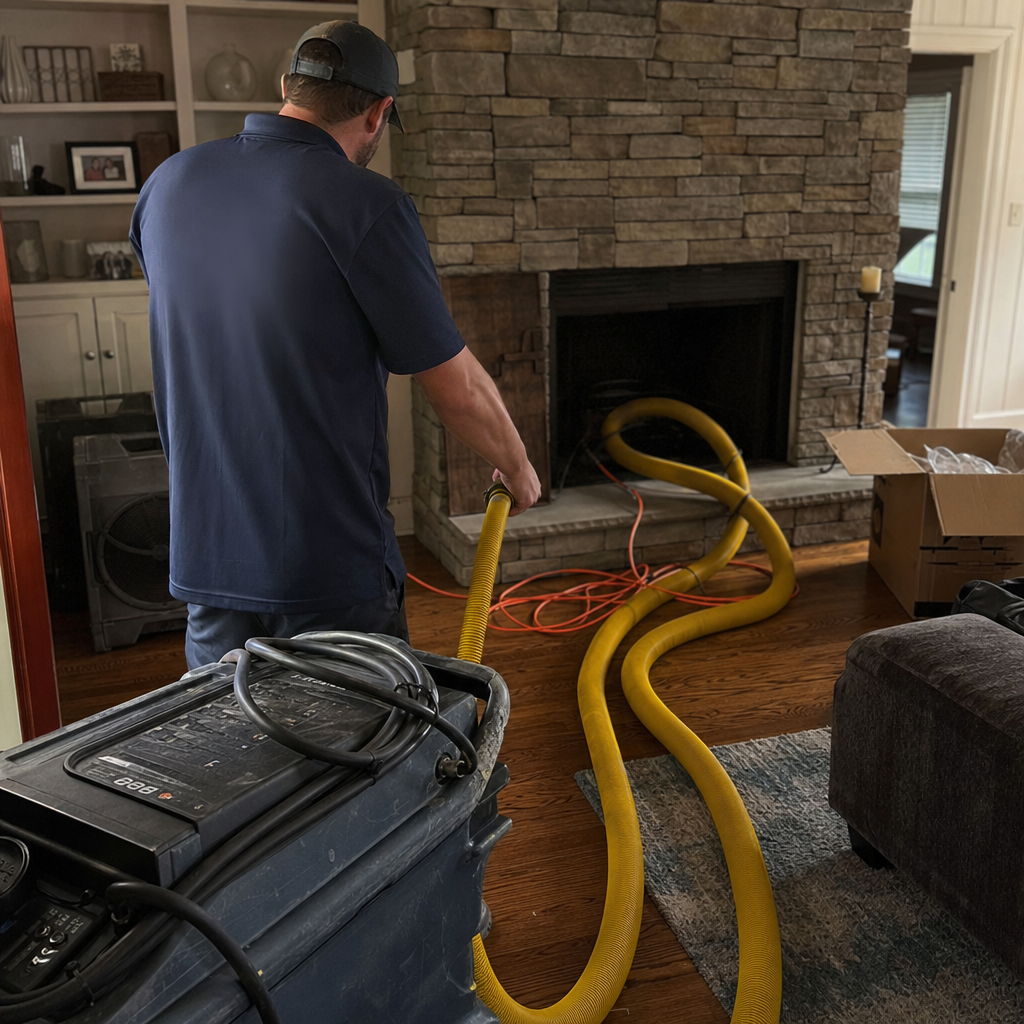
The roof vent premium surprises some homeowners until they watch Ronald set up the Nikro negative-air system and rotary brush on a 6/12 pitch in July heat. It’s not markup for markup’s sake — it’s the reality of working safely at height with equipment that weighs 40 pounds and needs stable positioning to do its job properly.
That Nikro system deserves emphasis because equipment choice directly affects whether your vent actually gets clean. We’ve been called in after budget operators who used leaf blowers or consumer-grade rod kits — tools that push lint deeper into long runs or simply punch a hole through a blockage without removing it. The Nikro rotary brush with reverse-skip navigation, paired with high-velocity negative air, pulls material out rather than compacting it further. On a 30-foot Tennessee attic run, that distinction means the difference between a vent that’s genuinely clear and one that’ll restrict again in six months.
The Hidden Cost Most Quote Sheets Don’t Mention
Here’s something we find in roughly one of every five older Tennessee homes: a disconnected, crushed, or partially collapsed flex foil duct section hidden behind the dryer wall. The 1980s and 1990s saw widespread use of cheap flex duct in this region, and that material degrades. It sags in humid attics. It gets crushed when homeowners push dryers back too hard. It separates at tape joints that have long since dried out.
A shop-vac operator working from the outside termination won’t catch this. Neither will the homeowner who cleans their lint trap religiously and assumes everything downstream is fine. Ronald carries a borescope camera specifically for this scenario — runs it from the dryer connection through the full length of the run — because we’ve seen too many cases where the vent path itself is the problem, not the lint buildup.
Finding a disconnected duct behind the wall changes the scope and the cost, but it also explains why your dryer’s been taking 90 minutes per load and why your energy bill spiked last winter. The repair typically adds $85–$150 to the service, including transition to proper rigid metal duct where code allows. We’ll show you the camera footage and explain exactly what we found before doing any additional work — that’s a promise.
I’ll tell you what’s in there, what it means, and exactly what it takes to fix it — nothing more.
How Tennessee’s Climate Shortens Your Safe Cleaning Interval
The standard advice you’ll see online says clean your dryer vent “every one to two years.” In Tennessee, we’d push that toward the shorter end, and for some homes, annually isn’t excessive.
Our humidity doesn’t just compact lint — it creates conditions where mold and mildew establish in partially restricted vents, particularly on north-facing wall terminations that never fully dry. We’ve opened vents in spring that smelled like a damp basement, microbial growth threading through accumulated lint. That’s not a fire hazard yet, but it’s an air quality issue for anyone running laundry near living spaces, and it’s a maintenance cost multiplier if it degrades the duct material itself.
The other Tennessee-specific factor: our pollen seasons. Oak and pine particulate that infiltrates homes through open windows settles in laundry areas, mixes with lint, and creates a particularly stubborn composite blockage. Homes near the Wolf River corridor, the wooded lots in East Memphis, or any property with mature canopy cover see this more acutely.
Ronald pressure-tests before and after every cleaning, using calibrated airflow measurement to document the actual improvement. A vent that tested at 8 CFM pre-service and 18 CFM post-service gives you objective proof of results — not just a receipt for work performed.
Repair or Replace? When Cleaning Isn’t the Right Call
Sometimes we’re asked whether cleaning is worth it on an aging system. Our honest answer: if your duct is original flex foil from a 1990s build, replacement with rigid metal duct often delivers better long-term value than repeated cleanings of deteriorating material.
We don’t sell duct replacement as a default upsell — Ronald will show you the camera footage and explain the condition frankly. But when we find ductwork that’s sagging, tape-failed, or showing corrosion from years of humid attic cycling, we’ll recommend replacement because it’s the right technical call, not because it’s the bigger ticket. Our Dryer Vent Cleaning in Tennessee service page details the full scope of what we evaluate.
For newer rigid duct in good structural condition, professional cleaning every 12–18 months in Tennessee conditions is the cost-effective path. At roughly $13–$23 per month of safe operation, it’s among the lowest-cost preventive maintenance items in your home — and against the backdrop of NFPA data showing dryer fires causing an estimated $200 million in annual property damage nationwide, it’s not a place to optimize for the lowest bid.
What Professional Equipment Actually Delivers for Your Money
The equipment conversation matters because Tennessee’s vent configurations punish inadequate tools. Here’s what Ronald brings to every dryer vent job, the same setup used for our full home duct cleaning services:
- Rotobrush rotary-brush system — motorized reverse-skip navigation that adapts to duct diameter changes and elbow transitions without getting stuck
- Nikro negative-air machine — high-velocity extraction that pulls dislodged material out rather than redistributing it downstream
- Borescope camera — for visual verification of blockage type, duct condition, and post-cleaning clearance
- Calibrated airflow meter — objective before/after measurement in CFM, not guesswork
- Abatement Technologies HEPA filtration — containment of dislodged particulate so it doesn’t settle in your living space during service
Consumer-grade alternatives — the $30 rod kits from hardware stores, the leaf blower attachments, the compressed-air “turbo” nozzles — simply don’t generate the agitation and extraction force for long, humid-compacted runs. We’ve retrieved rods that homeowners snapped off in elbows, plastic brush heads melted onto heating elements, and enough compressed lint to fill a grocery bag that a leaf blower just relocated to the attic termination.
The professional-grade investment shows up in results that last. Our 90 verified customer reviews averaging 4.7 stars include repeat bookings from homeowners who tried the budget route first and called us when the problem returned — sometimes with a dryer fire scare in between.
FAQs
Most Tennessee homeowners pay between $120 and $275 for professional dryer vent cleaning, with the typical job landing around $180 for a standard wall-exit configuration. Roof-vented or extended-run systems in two-story homes push toward the higher end. Call (844) 621-7071 for a free, same-day quote based on your specific vent layout — Ronald Sanchez handles every estimate personally.
DIY cleaning costs $30–$60 in tools but carries real risks: snapped rods in ductwork, incomplete blockage removal, and missed disconnected sections behind the wall. For Tennessee’s long, humid-compacted runs, professional equipment typically delivers safer, more complete results. If you’ve already tried DIY and your dryer’s still running hot or slow, call us for a camera inspection — we’ll show you what’s actually still in there.
Every 12–18 months for most Tennessee homes, and annually if you have heavy laundry volume, mature trees near your termination, or a roof-vented configuration. Our humidity compacts lint faster than dry climates, and pollen seasons add particulate that accelerates restriction. Ronald pressure-tests airflow at each service to tell you honestly whether you’re on track for the standard interval or need to tighten it up.
Yes — we repair disconnected, crushed, or deteriorated duct sections and transition flex foil to rigid metal where accessible. This requires camera inspection to locate and assess the damage, then wall access or attic routing depending on your home’s framing. We quote the repair before beginning any work beyond the standard cleaning scope, with typical repairs running $85–$150.
Ready for a Straight Answer on Your Dryer Vent Cost?
Every home’s different, and we’ll give you an exact number before any work starts — no surprises, no pressure. Call Nova Air Duct Cleaning Tennessee at (844) 621-7071 for a free estimate. Ronald Sanchez, our owner and lead technician, will ask about your vent configuration, your home’s age and style, and any symptoms you’ve noticed. From there, we’ll schedule service that fits your calendar and show up with the equipment to do it right the first time.
Written by Ronald Sanchez, Owner & Lead Technician at Nova Air Duct Cleaning Tennessee, serving Tennessee, TN.