
Duct Sealing Cost in Tennessee: What You’ll Actually Pay Based on How Much Air You’re Losing
Duct sealing in Tennessee typically runs between $800 and $2,400 for most homes, with smaller jobs starting around $450 and whole-system aerosol sealing reaching $3,500 for larger or harder-to-access systems. The exact price depends on your leakage rate, which method we use, and whether your ductwork needs repairs before sealing can hold. Call (844) 621-7071 and we’ll measure your actual leakage during a free estimate — no guesswork, no pressure.
If your energy bill spikes every June and your second floor never cools evenly, there’s a better-than-average chance you’re paying to air-condition your attic. Duct sealing is the fix, not a bigger unit. Across Tennessee, especially in neighborhoods with housing stock built before 2000 — think the older sections of Germantown, the ranch homes dotting Collierville, the mid-century builds in Bartlett — we regularly find 20 to 30 percent of conditioned air never making it to the rooms it’s supposed to serve. It escapes through cracked joints, failed tape, and disconnected flex runs, bleeding into 140-degree attic spaces every July afternoon.
We’ve been crawling through these attics for eight years. Ronald Sanchez, our owner and lead technician, grew up near Germantown watching his uncle run an HVAC service route, then trained at Southwest Tennessee Community College before building Nova into a one-man operation with 90 verified reviews averaging 4.7 stars. When we quote sealing work, we’re not pulling numbers from a franchise playbook — we’re measuring what your specific system is losing and pricing the fix accordingly.
How We Measure Leakage Before We Quote
Here’s what separates an accurate quote from a wild guess: we pressurize your duct system and measure the escape rate. A duct blaster test — the same diagnostic used in energy audits — tells us exactly how many cubic feet per minute are leaking and where the worst breaches sit.
Tennessee homes fall into three typical leakage profiles:
- Moderate leakage (15–25%): Common in homes 15–30 years old. Joints held with standard duct tape have dried and cracked. Mastic touch-ups and strategic tape replacement usually resolve this.
- Significant leakage (25–40%): Typical of pre-2000 builds with original ductwork. Multiple joint failures, often compounded by collapsed flex sections or ductboard deterioration. Requires section repair before sealing.
- Severe leakage (40%+): Usually involves disconnected trunk lines, major ductboard rot, or DIY modifications that compromised the system. Often needs partial replacement plus full sealing protocol.
We run this assessment during our standard Duct Repair & Sealing in Tennessee inspection — no separate diagnostic visit, no extra fee just to learn what’s wrong. Ronald carries a duct blaster and flow hood as standard equipment, same as he’d bring to any cleaning job where he suspects leakage is undercutting the home’s air quality.
Sealing Methods and What Each Costs Per Linear Foot
Most competitors list one method and one price. That’s useless because the right method depends on your duct material, accessibility, and leakage pattern. Here’s how we actually price the three approaches we use in Tennessee homes:
| Method | Best For | Cost Per Linear Foot | Typical Total Range |
|---|---|---|---|
| Mastic compound (brush-applied) | Metal ducts, accessible joints, moderate leakage | $4 – $7 | $800 – $1,500 |
| Metal-backed foil tape + mastic | Flex duct connections, spot repairs, hard-to-reach joints | $6 – $10 | $1,200 – $2,200 |
| Aerosol injection (Aeroseal-style) | Whole-system sealing, inaccessible runs, severe leakage | $1,800 – $3,500 flat | $1,800 – $3,500 |
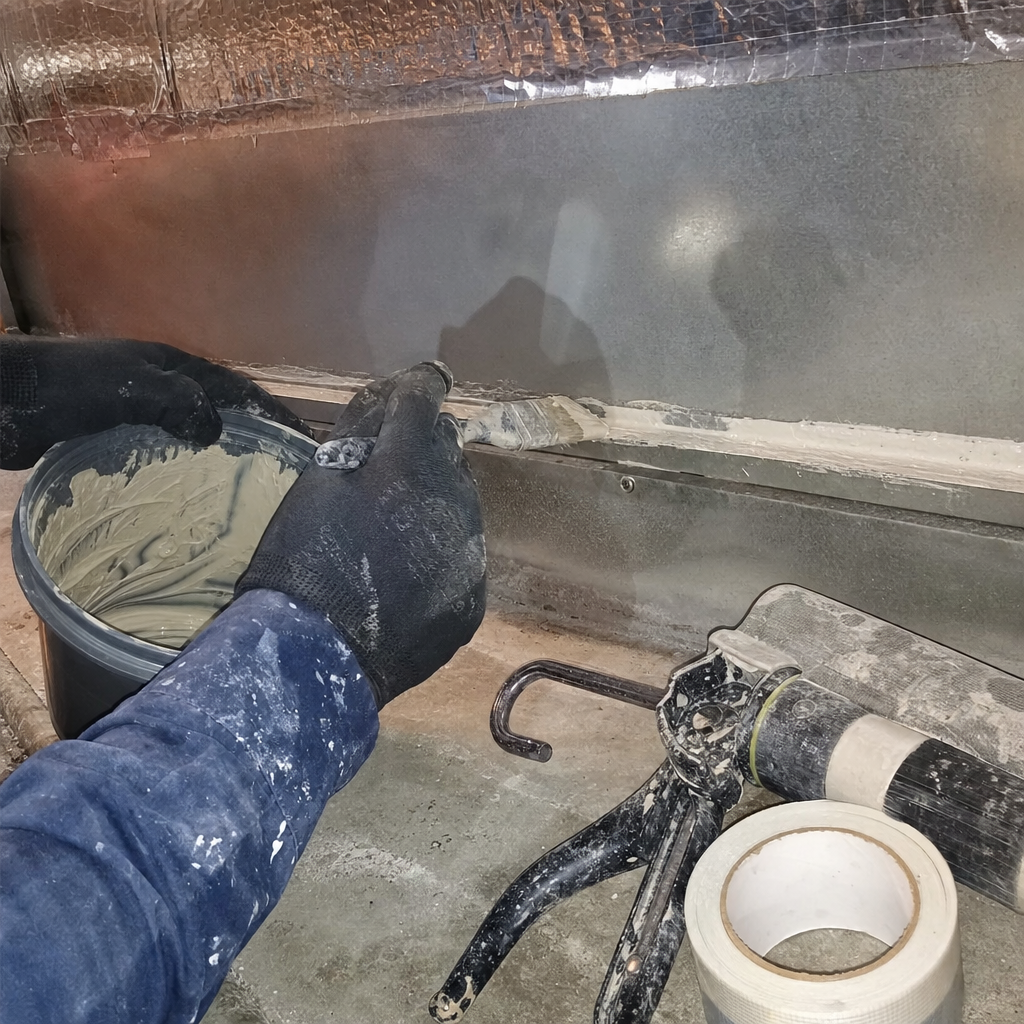
Mastic is the workhorse. It’s a thick, fiber-reinforced sealant we brush onto every joint and seam. It hardens flexible, handles thermal expansion, and lasts 20-plus years in Tennessee’s humidity swings. We use it on metal trunk lines and wherever we can physically reach the joint.
Metal-backed foil tape — not the cloth “duct tape” from hardware stores, which fails in attics — reinforces flex duct connections and spot-seals joints in tight quarters. We pair it with mastic at critical points. The tape alone runs $6–$10 per linear foot of treated joint, but most jobs blend methods.
Aerosol injection seals from the inside. We block all vents, pressurize the system with a fog of polymer particles, and watch as the sealant automatically deposits at leak points — even ones we couldn’t reach with a brush. It’s the only practical solution for some older Tennessee homes with ducts buried behind finished ceilings or packed into inaccessible soffits. The equipment investment is substantial, which is why only a handful of operators in the Memphis metro offer it. We don’t subcontract this — Ronald runs the protocol himself.
The Tennessee Attic Reality: Why Your Ducts Failed
Middle Tennessee attic temperatures regularly exceed 140°F in July. That heat doesn’t just make our work miserable — it destroys standard duct tape. The cloth-backed stuff homeowners buy at hardware stores? It dries out in three to five years under those conditions. The adhesive turns brittle, cracks, and curls away from the joint. We’ve pulled handfuls of it off 15-year-old systems, completely detached, flapping in the attic breeze from a vent fan.
This is the most common leakage source Ronald finds on Tennessee jobs: tape that was never rated for attic use, applied to joints that needed mastic, now failed and hiding the breach under a layer of dust. You can’t see the leak from below. You only feel it as uneven cooling and a meter that spins too fast.
The housing stock matters too. Post-war ranches in older Memphis neighborhoods often have original ductboard trunk lines — pressed-fiber board with a foil facing. After 40 years, the facing delaminates, the board crumbles at corners, and no amount of tape will seal it. We section in new ductboard or transition to metal before sealing, because sealing a crumbling substrate is throwing money away.
In newer subdivisions — the 1990s–2000s builds in Cordova, Lakeland, Arlington — flex duct was run fast and cheap during the construction boom. We’ve found entire basement ceiling runs where every connection was hand-tightened, never sealed, relying on friction alone. They held for a decade, then loosened as the house settled. The fix is methodical: disconnect, inspect, reseat with proper supports, then seal.
What Drives Price Up — and What Shouldn’t
Some cost factors are legitimate. Others are markup games we’ve seen competitors play.
Legitimate price drivers:
- Inaccessible attic runs: Ducts buried under blown insulation, threaded through trusses with no walk boards, or squeezed into knee-wall spaces add labor hours. We price this honestly — typically $150–$400 additional depending on access difficulty.
- Second-story systems: Longer vertical runs, more joints, often smaller attic hatches. Adds 20–30% to labor time.
- Ductboard section replacement: Rotted or collapsed sections must be rebuilt before sealing holds. Material is cheap; the precision fitting takes time. $200–$600 per section depending on size.
- Return air duct sealing: Return leaks pull hot attic air directly into your system, but they’re often in walls or chases that need creative access. Adds complexity.
Red flags — pricing games we don’t play:
Per-vent fees stacked on top of a sealing quote. If someone quotes you $800 for sealing plus $75 per vent, they’re double-charging for the same linear footage. Sealing is priced by the joint and the method, not by counting registers. We’ve also seen “diagnostic fees” that get waived only if you buy same-day — that’s pressure selling, not technical assessment.
Our approach: one price for the scope, measured and explained before we start. Home owners deserve to know what they’re paying for and why.
The Payback Math: What Sealing Actually Saves You
Here’s the calculation that makes the decision concrete. A 2,000 square foot Tennessee home with 25% duct leakage and a 3-ton AC unit running April through October:
At Tennessee’s average residential electricity rate (roughly $0.12/kWh), cooling that home with leaky ducts costs approximately $1,440–$1,680 per season. Seal that leakage to under 5% — the industry standard for a tight system — and you’re looking at $1,080–$1,260 for the same comfort. The annual savings land at $360–$420.
A $1,200 mastic-and-tape job pays for itself in 3–3.5 years. A $2,800 aerosol seal in a hard-to-access system: 6.5–7.5 years. But that’s only the direct energy math. It doesn’t count:
- Extended compressor life from reduced runtime
- Even room temperatures, meaning you’re not supplementing with portable fans or space heaters
- Reduced humidity intrusion — leaky returns pull humid attic air that forces longer cooling cycles
- Improved filtration effectiveness, since all air passes through your filter, not unfiltered attic bypass
We’ve had Tennessee customers tell us their upstairs bedrooms finally match the thermostat setting for the first time in years. That’s not a luxury — it’s the system working as designed.
How Nova’s End-to-End Scope Changes the Sealing Conversation
Most duct cleaning companies clean and leave. They don’t look for leakage. They don’t carry mastic. They don’t own a duct blaster.
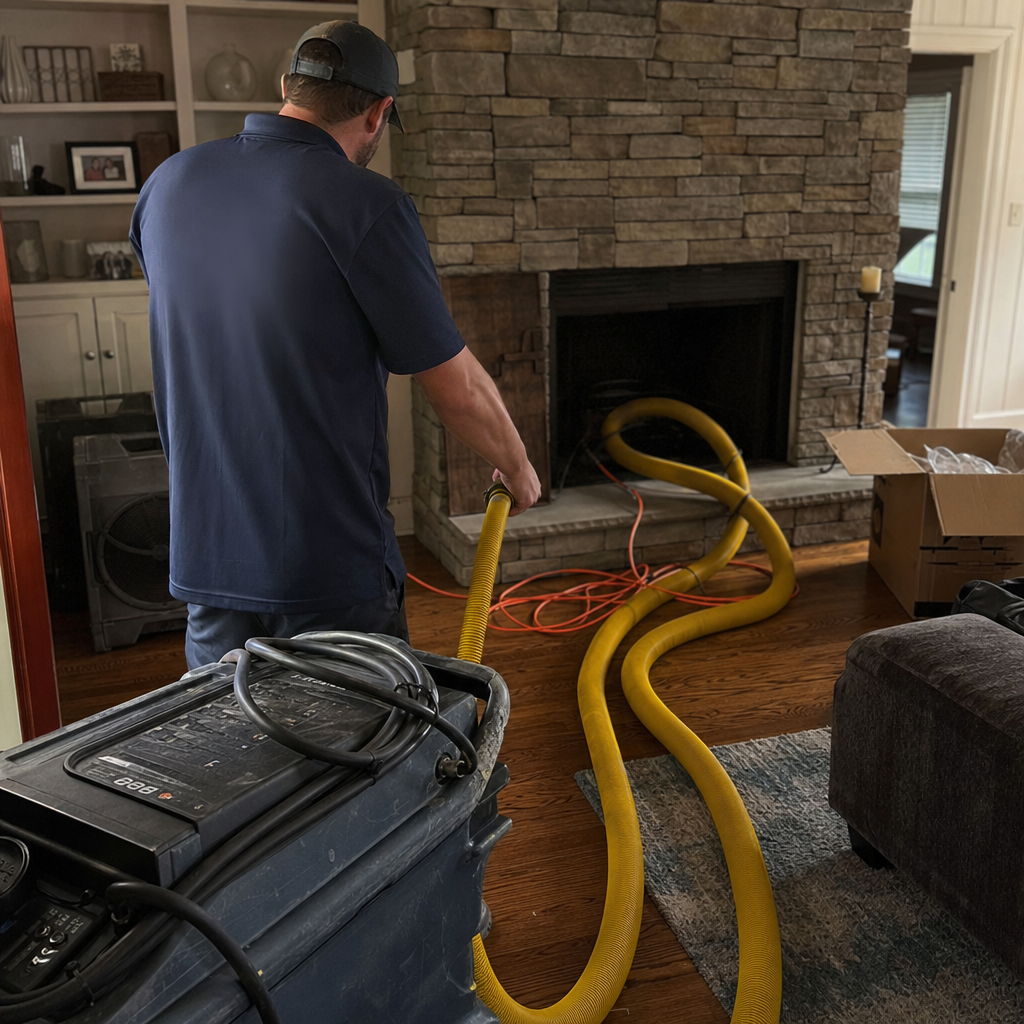
Our Duct Repair & Sealing protocol runs on Rotobrush rotary systems and Nikro negative-air machines — the same equipment used in commercial and industrial environments, not repurposed shop vacs. During a standard cleaning, Ronald inspects every joint he can access. He identifies disconnected flex, collapsed sections, and tape failure as part of the same visit. There’s no separate “diagnostic appointment” to sell you something else.
This matters because leakage and contamination are connected. Leaky supply ducts lose pressure, so returns pull harder — and they pull from wherever they can, including wall cavities, musty crawl spaces, and that corner of the attic where the old roof leaked. Sealing without cleaning leaves biological growth in the system. Cleaning without sealing invites recontamination. We address both in one scope, with one technician who sees the whole picture.
Our sanitizing protocol, when needed, uses professional-grade products — Guardsman formulations among our options — applied after sealing so the treatment stays in the ductwork instead of leaking out through joints.
I’ll tell you what’s in there, what it means, and exactly what it takes to fix it — nothing more. That’s how we’ve built 90 reviews at 4.7 stars. No upsells, no scare tactics, just what your system actually needs.
Common Local Scenarios We See in Tennessee Homes
The 1970s Ranch with Original Ductboard: Built fast, built cheap, never touched since. Ductboard trunk in the attic, flex drops to ceiling registers. The ductboard corners have crumbled; the flex connections have loosened. We section in new ductboard at the trunk, reseat and support every flex drop, then mastic-seal the entire network. Typical cost: $1,600–$2,400.
The 1990s Subdivision with “Builder Grade” Flex: Every joint hand-tightened, no sealant, flex draped over trusses without support. After 25 years, sagging has created low points where condensation collects, and friction-fit connections have loosened. We lift and support the flex, replace any water-damaged sections, then tape and mastic every joint. Typical cost: $1,200–$1,800.
The Finished Basement with Buried Ducts: Ducts run through soffits or bulkheads with no access panels. Leakage is suspected from uneven temperatures and high humidity. Aerosol injection is often the only practical solution without destructive drywall work. Typical cost: $2,200–$3,200.
The “Recently Renovated” Home with DIY Duct Modifications: Homeowner or handyman added a vent, moved another, used hardware-store tape. Leakage at every new joint, often with undersized flex creating turbulent flow and noise. We assess the modifications, resize where needed, and seal properly. Typical cost: $900–$1,600 depending on extent of rework.
FAQs
Most Tennessee homeowners pay between $800 and $2,400 for professional duct sealing, with smaller accessible jobs starting around $450 and whole-home aerosol sealing for complex systems reaching $3,500. The exact cost depends on your measured leakage rate, duct accessibility, and whether sections need replacement before sealing can hold. Call (844) 621-7071 for a free estimate with exact pricing for your home.
Repair and sealing is almost always cheaper than full replacement — typically 40–60% less — and it’s sufficient for most Tennessee homes where the duct material itself is intact. Replacement becomes necessary when ductboard has crumbled, metal ducts have rusted through, or flex duct has collapsed or been chewed by rodents. During our inspection, we’ll show you which condition yours is in and price both paths honestly. Call (844) 621-7071 and we’ll assess what your system actually needs.
Yes — and we often do. Because Ronald performs both the cleaning and sealing assessment during the same visit, we can identify leakage points while the system is open and pressurized, then seal immediately if the scope is straightforward. Larger jobs or those requiring aerosol injection may need scheduling, but there’s never a separate diagnostic appointment just to tell you what’s wrong. Call (844) 621-7071 to book a combined cleaning and sealing evaluation.
Most sealing jobs take 3–6 hours for a typical Tennessee home, with aerosol injection adding 2–3 hours for setup and cure time. You’ll notice more even temperatures within 24 hours as balanced airflow reaches rooms that were previously starved. Energy bill impact shows up the following month, with full seasonal savings visible after your first complete cooling cycle. Call (844) 621-7071 to schedule — we can often book within a few days.
Ready to Stop Air-Conditioning Your Attic?
Uneven rooms, spiking summer bills, and a system that never seems to catch up — these aren’t signs you need a bigger unit. They’re signs 20–30% of your conditioned air is going somewhere useless. Ronald Sanchez will measure your actual leakage, show you where it’s escaping, and seal it with the right method for your duct type and access. No per-vent gimmicks, no pressure, just straight answers and work that holds up in 140-degree Tennessee attics. Call (844) 621-7071 for your free estimate — we’ll have a real number for you, not a range pulled from a franchise manual.
Written by Ronald Sanchez, Owner & Lead Technician at Nova Air Duct Cleaning Tennessee, serving Tennessee, TN.