
Is Air Duct Cleaning Worth It in Tennessee? Usually Yes — But Only Under These Conditions
Air duct cleaning is worth the investment for most Tennessee homeowners who have visible mold growth, pest evidence, excessive debris buildup, or occupants with allergy symptoms that worsen when the HVAC runs — but it’s not worth it for newer homes with clean system histories or well-maintained HEPA filtration. In Tennessee’s humid climate, biological contamination in flex duct systems creates a fundamentally different risk profile than the dust-only scenarios studied in older research. Call (844) 621-7071 for a no-pressure assessment of whether your home actually needs it.

Why the “Duct Cleaning Doesn’t Work” Studies Don’t Tell the Whole Story
The most-cited research questioning duct cleaning’s value comes from a 1997 EPA and Health Canada study examining whether routine cleaning improved indoor air quality in homes with no specific contamination problems. Here’s what that study actually found — and what gets lost in the retelling.
The researchers concluded that routine cleaning of essentially clean ducts did not measurably improve air quality. That’s a narrow finding, and it’s routinely misquoted as “duct cleaning doesn’t work at all.” The study explicitly noted that cleaning did show benefits when systems contained substantial visible contamination. The problem? The housing stock in that 1997 study was dominated by galvanized steel ductwork — rigid, smooth-walled systems common in older Northern and Midwestern construction.
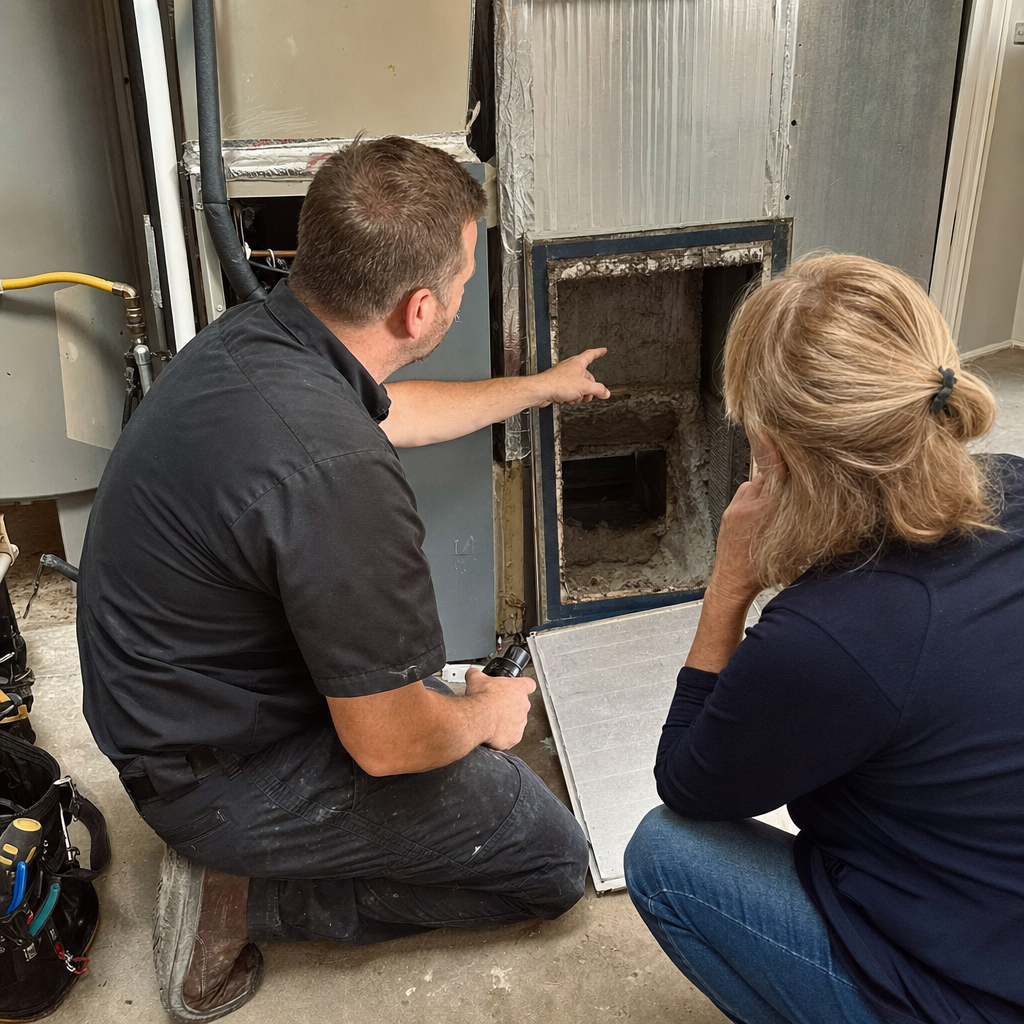
Tennessee homes built from the mid-1990s forward are different. Flex duct — corrugated, insulated, and far more prone to trapping debris — became standard here. That corrugated interior creates thousands of small pockets where dust, pollen, and biological material accumulate in ways smooth steel simply doesn’t. The 1997 study never examined flex duct contamination patterns because flex duct wasn’t yet dominant. When Ronald Sanchez, Owner & Lead Technician at Nova Air Duct Cleaning Tennessee, pulls a Rotobrush through a 20-year-old flex run in a Collierville or Germantown home, the debris load often surprises homeowners who assumed their “clean” system was fine.
The study also didn’t account for Southern humidity’s role in transforming dust accumulation into active biological growth. In Tennessee’s climate corridor, moisture plus organic debris equals mold and mildew colonization — a contamination type with genuine health implications that passive dust accumulation lacks.
Three Conditions Where Cleaning Made a Clear Difference — From 8 Years of Field Checks
After eight years of crawling through attic runs and crawlspace ductwork across Tennessee, we’ve learned to spot the homes where cleaning produces genuinely noticeable results. The pattern is consistent enough that Ronald now asks three specific questions before scheduling any appointment.
- Visible particulate discharge at registers: When the system kicks on, do you see dust puffing from vents or accumulating on nearby surfaces within days of cleaning? This indicates active debris mobilization, not static buildup. We see this frequently in older Memphis-area homes with original ductwork and in properties near construction zones where fine particulate infiltration is ongoing.
- Musty odor when the system cycles: A damp, earthy smell at startup strongly suggests biological growth on duct surfaces — particularly common in Tennessee homes that have experienced any condensate overflow, crawlspace moisture intrusion, or past flooding. The odor is the volatile organic compounds from active microbial colonies. Standard dust removal won’t address this; cleaning plus sanitizing with Guardsman products is required.
- Allergy symptoms that correlate with HVAC runtime: When occupants report symptoms that worsen within 30 minutes of the system starting and improve when windows are opened, the duct system is actively distributing allergens. Ronald’s entry into this field came from exactly this scenario — helping a neighbor whose family had persistent allergy issues tracing directly to heavily contaminated ductwork. Seeing that relief firsthand stuck with him.
Homes matching one or more of these criteria almost always show measurable improvement after professional cleaning with rotary-brush and negative-air systems. Homes matching none of them rarely show enough change to justify the cost.
Tennessee’s Humidity Problem: Why Local Climate Changes the Calculation
The generic “is it worth it” debate ignores regional climate entirely. That’s a mistake in Tennessee.
Our state’s humid subtropical climate creates condensation risks inside duct systems that arid Western or cold Northern climates simply don’t face. When cool conditioned air moves through ductwork in a hot, humid attic or crawlspace, the temperature differential drives moisture accumulation on duct surfaces. Add dust — which acts as a nutrient source — and you’ve created an incubator for mold and bacterial growth.
We’ve found active biological contamination in duct systems across Tennessee neighborhoods from East Memphis to Franklin to Murfreesboro, often in homes where owners had no idea their crawlspace humidity was running 70% or higher. The 1997 EPA study’s “clean ducts” baseline doesn’t apply when your ducts are growing something.
Specific local scenarios we encounter regularly:
- Post-flood recovery homes: After the 2010 Nashville flood and periodic flash flooding across Middle Tennessee, many homes had duct systems submerged or exposed to standing water. Even “restored” properties often have residual contamination in low-lying duct runs that standard remediation missed.
- Crawlspace conversions: Tennessee’s prevalence of crawlspace construction means ductwork often runs through spaces that transition from vented to sealed — changing moisture dynamics without updating the HVAC system. We’ve found rusted flex duct and collapsed insulation in homes from Jackson to Chattanooga where this transition created condensation problems.
- Older Memphis housing stock: Pre-1980 homes in neighborhoods like Midtown and Binghampton frequently have original galvanized steel ductwork with decades of accumulated debris, plus asbestos-containing duct tape that requires careful handling. These systems benefit enormously from cleaning but need specialist equipment — the Rotobrush systems we use were designed partly for this application.
“I’ll tell you what’s in there, what it means, and exactly what it takes to fix it — nothing more.” That’s how Ronald approaches every inspection, and it’s particularly important with moisture-compromised systems where overselling is common.
The Real Cost Calculation: Cleaning vs. Neglect
Most “worth it” analyses frame duct cleaning as an air quality purchase alone. That’s incomplete. The better question: what’s the cost of cleaning versus the cost of the HVAC problems that neglected ducts cause?
We’ve documented three direct mechanical consequences of deferred duct maintenance in Tennessee homes:
Evaporator coil fouling: When debris breaks free from ductwork and reaches the coil, it acts as an insulating blanket. A partially clogged coil can reduce system efficiency 15-30% and eventually cause freeze-ups that damage compressors. Coil replacement runs $1,200–$2,800 in Tennessee’s market — substantially more than preventive duct cleaning.
Restricted return airflow: Heavy accumulation in return ductwork forces the blower motor to work harder, increasing energy draw and accelerating bearing wear. We’ve measured static pressure increases of 0.3–0.5 inches water column in heavily contaminated systems — enough to trigger high-limit switches and shorten equipment life.
Blower motor debris ingestion: Fine particles bypassing filters accumulate on blower wheels, throwing them out of balance. The resulting vibration damages motor mounts and bearings. This is particularly common in homes with pets or recent renovation dust.
Here’s how typical costs compare for Tennessee homeowners:
| Service/Outcome | Typical Cost Range in Tennessee |
|---|---|
| Professional air duct cleaning (whole system) | $350 – $650 |
| Cleaning + sanitizing for biological contamination | $500 – $850 |
| Evaporator coil replacement | $1,200 – $2,800 |
| Blower motor replacement | $450 – $1,100 |
| Compressor replacement (from freeze-up damage) | $1,800 – $3,500 |
The risk-weighted math favors cleaning when any contamination indicators are present — particularly in aging systems where component replacement costs escalate. For a clean system in a newer home, the preventive value is lower and the “worth it” calculation shifts accordingly.
When Duct Cleaning Is NOT Worth It — And We’ll Tell You So
Ronald’s credibility comes partly from turning down work. We’ve told homeowners their money was better spent elsewhere, and that honesty builds the trust that produces our 90 verified reviews averaging 4.7 stars.
Recently built homes with clean system histories: If your home was constructed in the last 3–5 years and the HVAC has run normally with no moisture events, duct cleaning is premature. New construction debris should have been cleared during initial commissioning; if it wasn’t, that’s a builder issue to address first.
Systems with maintained HEPA filtration: Whole-home HEPA systems from Aprilaire or equivalent, changed on schedule with sealed ductwork, rarely accumulate significant debris. We verify this with camera inspection before recommending anything.
Single-room complaints with obvious source: When one bedroom has dust issues and the rest of the home doesn’t, the problem is usually local — a disconnected duct boot, a failed register seal, or an attic access issue. Whole-system cleaning would be overkill.
Homes where the real problem is duct leakage: If conditioned air is escaping into the attic through disconnected seams, cleaning the remaining airflow path won’t fix comfort or efficiency. We perform duct leakage assessment and can seal with proper mastic and mechanical fasteners — sometimes that’s the right service, not cleaning.
Our Air Duct Cleaning in Tennessee service page details what professional cleaning actually involves, but the first step is always honest assessment of whether you need it.
What Professional-Grade Cleaning Actually Delivers
When cleaning is warranted, the equipment and operator matter enormously. Budget operators using shop vacs and rotary brushes attached to drills can’t match what commercial-grade systems achieve.
We use Rotobrush rotary-brush systems with HEPA-filtered vacuums — the same equipment specified in commercial and industrial cleaning protocols. The rotating brush loosens adhered debris from flex duct corrugations while simultaneous vacuum extraction prevents redistribution. For heavier contamination or biological growth, Nikro negative-air machines create controlled airflow that isolates the work zone.
Post-cleaning verification matters too. We inspect with borescope cameras to confirm debris removal, measure static pressure to document airflow improvement, and can apply Abatement Technologies air-filtration recommendations where ongoing particulate issues exist. The owner shows up — and does the work himself — so there’s no gap between assessment and execution.
This matters because poorly executed cleaning can damage flex duct, dislodge connections, or redistribute contamination. We’ve been called to fix other operators’ work in Tennessee homes where “cleaning” left registers dirtier than when they started. Eight years of duct work. One specialist. Your home.
FAQs
Whole-system air duct cleaning in Tennessee typically runs $350–$650 for a standard residential home, with larger homes or systems requiring sanitizing for biological contamination reaching $500–$850. Pricing varies with system size, accessibility, and contamination severity — we provide exact quotes after inspection, never over the phone with no information. Call (844) 621-7071 for a free, no-pressure assessment with upfront pricing.
Improperly performed cleaning can temporarily increase airborne particulates if the operator uses uncontrolled agitation without adequate vacuum extraction — but professional cleaning with HEPA-contained rotary-brush or negative-air systems should not worsen allergies. We seal registers during work, use continuous vacuum capture, and verify with post-cleaning inspection. If your allergy symptoms are HVAC-correlated, proper cleaning typically improves them within 48–72 hours as residual settled dust clears.
Most Tennessee homes benefit from cleaning every 3–5 years, but homes with pets, recent renovations, crawlspace moisture history, or occupants with respiratory sensitivities may need service every 2–3 years. The EPA doesn’t mandate a fixed schedule because conditions vary enormously — we recommend inspection with borescope camera every 3 years to assess actual accumulation rather than cleaning on arbitrary intervals.
Cleaning is substantially cheaper — typically 15–25% the cost of partial duct replacement — but replacement becomes necessary when flex duct is torn, water-damaged, or contaminated with mold that has penetrated the insulation layer. We evaluate this during inspection: surface biological growth can often be cleaned and sanitized, but saturated or structurally compromised ductwork requires replacement. We’ll show you camera footage and explain exactly which condition yours represents.
Ready for an Honest Assessment?
If you’re unsure whether your Tennessee home needs duct cleaning, we’d rather inspect and tell you “not yet” than sell you service you don’t need. Nova Air Duct Cleaning Tennessee offers no-pressure assessments with camera documentation — you’ll see exactly what we see. Call (844) 621-7071 to schedule with Ronald Sanchez, or return to our home page to learn more about our full indoor air quality services.
Written by Ronald Sanchez, Owner & Lead Technician at Nova Air Duct Cleaning Tennessee, serving Tennessee, TN.