
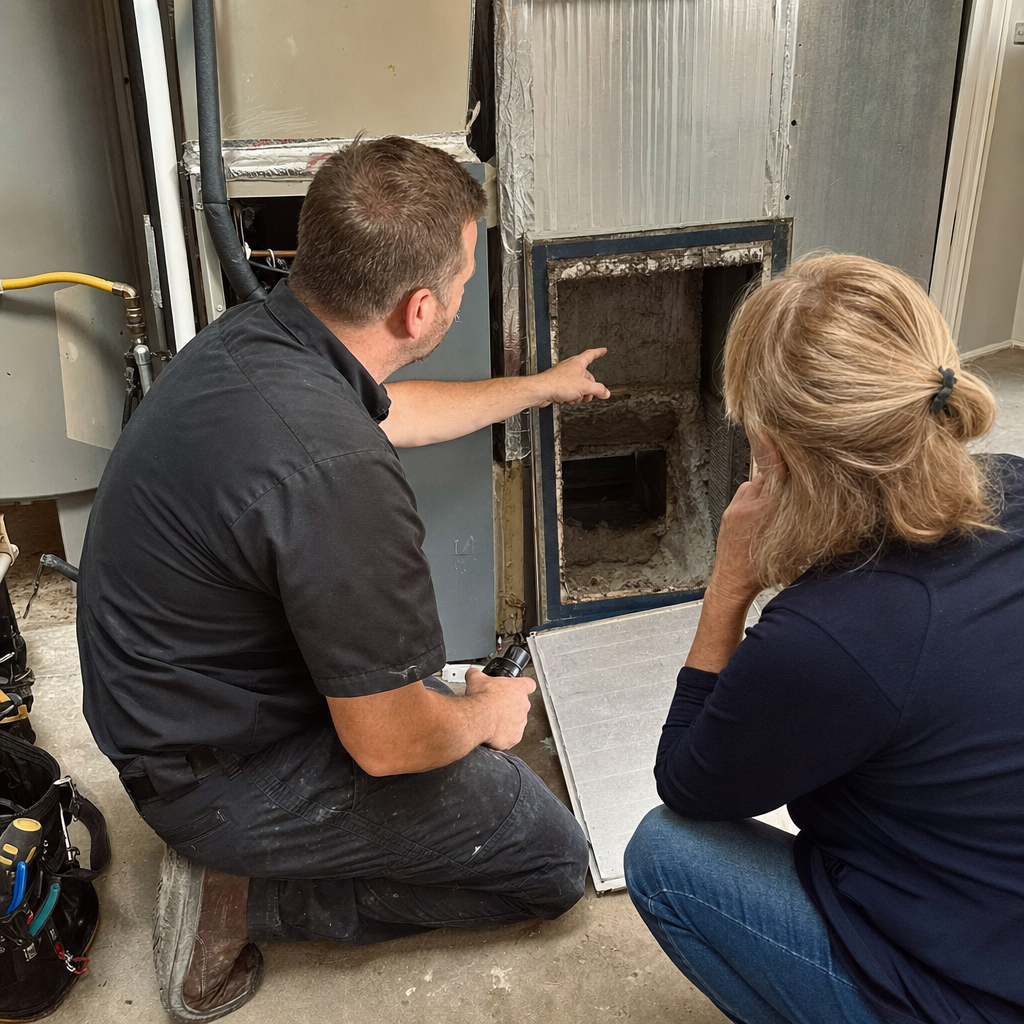
How Often Should You Clean Your Air Ducts in Tennessee? Every 2–3 Years for Most Homes, Sooner If You See the Warning Signs
For a typical Tennessee home with no special risk factors, we recommend cleaning your air ducts every 2 to 3 years — not the generic 3-to-5-year interval you’ll see on national websites. Here’s why that national number doesn’t hold up here: Tennessee homes run their HVAC systems roughly 10 months out of 12, and our sustained humidity levels (60–70% RH through much of the year) create conditions for biological growth inside ductwork that simply doesn’t happen at the same pace in drier, more temperate climates. If your filters are clogging faster than the calendar says they should, your ducts are telling you something. Call (844) 621-7071 and we’ll show you exactly what we find.

Why Tennessee’s Climate Shortens the Standard Cleaning Interval
The “every 3–5 years” advice you’ll find on most home-maintenance sites was written for a national average that skews toward places like Colorado or the Pacific Northwest — regions where HVAC systems see seasonal rest and indoor humidity stays low enough to keep microbial growth in check. Tennessee doesn’t fit that profile.
In the Memphis area and across the state, we see systems that accumulated in 30 months what takes 5 years to build in Denver. The combination of heavy cooling loads from May through October, followed immediately by heating demand, means your blower is moving air through those ducts almost continuously. Every hour of runtime pulls particulate past the filter, past the coil, and into the supply trunk. Over time, that layer builds.
The humidity factor is what really changes the math. When relative humidity inside ductwork stays above 60% for extended periods — common in Tennessee basements, crawl spaces, and even conditioned attics — dust and organic debris on duct surfaces become a viable substrate for mold and bacterial growth. We see it regularly in homes near the Wolf River watershed, in older Collierville subdivisions with original galvanized ductwork, and anywhere a previous owner ran the system with a clogged filter for a season or two. Once biological growth establishes, every cycle of the blower distributes spores and fragments through the living space. Cleaning removes the buildup; sanitizing addresses the biological component. Both matter here.
Ronald Sanchez, who leads every job personally, grew up near Germantown watching his uncle run an HVAC service route through these same neighborhoods. He’ll tell you what’s in there, what it means, and exactly what it takes to fix it — nothing more. That background means he’s not guessing at what Tennessee humidity does to ductwork. He’s documented it across hundreds of homes.
The Filter-as-Proxy Rule: A Field Test You Can Run This Month
Here’s a practical diagnostic Ronald uses on every service call, and you can run it yourself: Install a fresh MERV-8 pleated filter (or higher — Honeywell and Aprilaire both make reliable options we stock). Mark the date. Check it at 14 days.
If that filter is uniformly gray across the full surface area within two weeks, your duct system is contributing to the particulate load — not just filtering outdoor air. What you’re seeing is accumulated debris inside the return plenum, trunk lines, or branch ducts being pulled back into the airstream every time the blower cycles on. A clean duct system doesn’t re-entrain material at that rate.
We’ve measured this. In a typical Tennessee home that’s due for cleaning, we’ll pull 3–7 pounds of debris from the duct system using our Rotobrush rotary-brush and Nikro negative-air equipment. After a thorough cleaning, that same filter test at the same home typically shows 30–50% slower loading. The filter becomes a honest indicator again, not a symptom of upstream contamination.
This test is especially revealing in homes with:
- Multiple pets (dander and hair accelerate buildup significantly)
- Carpeted bedrooms with return vents on the floor
- Original ductwork from the 1980s or 1990s with internal fiberglass lining
- Recent landscaping or construction activity upwind of the outdoor unit
When the filter loads fast, the ducts need attention. The calendar is secondary to what you can observe.
Baseline vs. Accelerated: Matching the Schedule to Your Home
Not every Tennessee home needs the same interval. We break this into two categories based on what we find in the field.
Baseline Schedule: 2.5 to 3 Years
This applies if you have: no pets, no smokers in the home, a HVAC system under 10 years old, MERV-8 or better filters changed on schedule, no recent renovations, and no occupants with asthma, COPD, or significant allergies. You’re the homeowner who maintains the system, and the ductwork itself is in good structural condition with no leaks or water damage history.
Even at this baseline, we recommend a visual inspection at the 2-year mark. Our process includes camera inspection of the trunk line and a few representative branch ducts. Sometimes the inspection confirms you’re fine for another season. Sometimes we find a return leak pulling attic debris, or a disconnected flex duct in a crawl space that changed the equation. The inspection itself is quick and informs the decision.
Accelerated Schedule: Every 12 to 24 Months
Several conditions push Tennessee homes into this category. We’ve learned to recognize them through eight years of specialized duct work across the region:
- Pet households: One shedding dog roughly doubles particulate loading; two or more pets, or any indoor cats (litter dust is extremely fine and penetrates standard filtration), typically need annual attention to the return system.
- Smoking indoors: Tobacco residue creates a sticky film on duct surfaces that traps subsequent particulate. The contamination is layered and requires more frequent removal.
- Post-renovation: Even “dust-controlled” remodeling generates massive particulate. We see this constantly in the expanding suburbs around Nashville and in historic Memphis renovations where plaster and lathe work was involved. The interval resets to zero after any significant renovation — clean immediately, then reassess.
- Respiratory conditions: When someone in the home has asthma, severe allergies, or compromised immunity, the threshold for acceptable indoor particulate drops dramatically. More frequent cleaning, combined with proper sanitizing using appropriate methods, becomes a medical priority rather than a maintenance preference.
- Prior water damage or mold remediation: Even after successful remediation, these homes carry higher biological baseline loads. We typically recommend 12-month intervals with sanitizing for the first 2–3 cycles, then reassess based on what our documentation shows.
- New HVAC installation: A new system with a powerful variable-speed blower will disturb decades of settled debris in existing ductwork. We clean before the new equipment goes live, or immediately after if the contractor didn’t specify it. The new system’s efficiency and warranty both depend on clean ducts.
Event-Based Triggers That Override Any Calendar
Some events reset your cleaning clock regardless of when you last had service. These aren’t “maybe” situations — in our experience, the duct contamination from these events doesn’t stay contained.
Purchase of an older home with unknown maintenance history: We see this frequently in established Tennessee neighborhoods — Midtown Memphis, East Nashville’s older pockets, historic districts in Franklin. If you don’t have documentation of the last cleaning, assume the ducts haven’t been cleaned in a decade or more. The first cleaning in these homes often yields surprising debris loads, including construction debris from the original build, previous rodent activity, and degraded filter material from years of neglect.
Evidence of rodents or insects in attic or crawl space: Droppings, nesting material, or carcasses in ductwork are a health hazard requiring immediate attention. We clean, sanitize, and seal entry points. The interval resets to zero.
Visible mold anywhere in the HVAC system: If you see mold on vents, in the return plenum, or on the coil, the duct system needs inspection. Surface mold on a vent often indicates more extensive colonization upstream. We use Abatement Technologies HEPA filtration during our process to prevent cross-contamination during cleaning.
Musty or stale odors when the system cycles: This is often the first symptom homeowners notice. By the time odor is detectable in the living space, the biological activity in the ductwork is established. Don’t mask it — find the source and remove it.
What Our Documentation Tells You About Your Next Interval
Here’s where Nova’s approach differs from operators who clean and leave. Ronald documents every job with before-and-after photos, debris weight, and airflow measurements at key registers. You get a baseline.
If we pulled 6 pounds of debris from your system and airflow at your master bedroom register improved from 85 CFM to 120 CFM, you have objective data. Next time, if the filter test starts failing at 18 months instead of 24, you’ll know whether that’s normal drift or a sign that something changed — a new pet, a filter downgrade, a duct leak you haven’t found yet.
Our Air Duct Cleaning in Tennessee service includes this documentation as standard. We’ve found that homeowners who understand what was in their system make better decisions about maintenance intervals. They’re not guessing based on a website they read; they’re responding to their own home’s pattern.
The equipment matters for this accuracy. Our Rotobrush rotary-brush systems and Nikro negative-air machines are the same units used in commercial and industrial environments — not repurposed shop vacs with brush attachments. When we tell you the system is clean, we’re measuring that cleanliness, not estimating it.
Common Local Scenarios We See in Tennessee Homes
Every region has its own pattern of duct problems. Here are the situations we encounter regularly enough that they’re worth naming:
The Germantown ranch with original ductwork: Built in the 1970s or 1980s with galvanized steel trunks and fiberglass-lined branch ducts. The lining degrades, the steel corrodes at seams, and every joint leaks a little. These systems need cleaning more frequently because they’re pulling attic or crawl space air continuously, and the degraded lining traps debris that smooth metal would shed.
The new construction home with “clean” ducts: We cleaned a home in a Collierville subdivision where the builder had left construction debris — drywall dust, wood shavings, insulation scraps — in the ductwork for two years of occupancy. The homeowners had changed filters religiously but couldn’t understand why dust accumulated on furniture within days of cleaning. The ducts were the source, not the symptom.
The historic home with added HVAC: Common in Memphis and Nashville historic districts. Ductwork was retrofitted into spaces never designed for it — tight chases, unconditioned crawl spaces, exterior walls with no proper sealing. These systems run inefficiently and pull contamination from every surrounding cavity. Cleaning helps; sealing helps more; both together change the indoor air quality measurably.
The home after a Memphis summer with near-100% humidity: Even well-maintained systems can develop biological loading after an exceptionally humid season. We see the spike in calls every September — homeowners who noticed the change in air quality but couldn’t identify the cause.
What Happens If You Wait Too Long
Extended intervals don’t just mean more debris. They mean harder-to-remove debris. Dust that sits in humid ductwork compacts and partially adheres to surfaces. Biological growth establishes and produces sticky metabolic byproducts that bind material to the duct wall. The cleaning process takes longer, requires more aggressive mechanical action, and sometimes reveals damage that accumulated debris was hiding — disconnected ducts, corroded fittings, failed sealing.
We’ve also seen the downstream equipment damage. Excessive particulate loading shortens blower motor life, fouls evaporator coils (reducing efficiency and eventually causing freeze-ups), and can damage the heat exchanger in gas furnaces by restricting airflow and causing overheating cycles. The cost of delayed duct maintenance often shows up as a premature HVAC repair that could have been avoided.
Our home page outlines the full scope of what we check during a duct cleaning — it’s not just the visible vents.
FAQs
Most whole-home duct cleanings in Tennessee range from $350 to $650 for a standard residential system, with larger homes or systems requiring extensive sanitizing running toward the upper end. The exact price depends on your home’s square footage, the number of HVAC zones, the accessibility of your ductwork, and whether we find conditions requiring repair or sealing. We provide upfront pricing before any work begins — no surprises when we’re done. Call (844) 621-7071 for a free estimate specific to your home.
DIY duct cleaning with consumer-grade equipment typically costs $100–$200 in rental fees but removes only surface debris near vent openings, leaving the trunk lines, plenums, and branch ducts untouched — which is where the majority of contamination accumulates. Professional cleaning with rotary-brush and negative-air systems reaches the full system and includes debris extraction rather than redistribution. For the cost difference, most Tennessee homeowners find professional service more effective, especially given our humidity-driven contamination patterns. We can assess whether your system needs full service or if a lighter maintenance approach would suffice — call (844) 621-7071 to discuss.
Dirty air ducts can contribute to respiratory irritation, allergy symptoms, and in cases with significant biological contamination, more serious health effects — particularly for children, elderly occupants, and anyone with asthma or immune compromise. In Tennessee’s humid climate, we’ve documented mold and bacterial growth in duct systems that correlated directly with occupant symptom patterns. Not every dirty duct system causes illness, but when we find heavy biological loading or rodent contamination, the health risk is real and immediate. If someone in your home has unexplained respiratory symptoms that worsen when the HVAC runs, duct inspection is a logical step.
Run the filter test described above — fresh MERV-8 filter, check at 14 days. If it’s gray uniformly, call us. Also watch for: visible dust puffing from vents when the system starts, musty or stale odors during blower operation, uneven heating or cooling between rooms, or any history of the events listed in our trigger section. Ronald personally inspects every system we service, and we’ll tell you honestly whether your ducts need immediate attention or can wait. No upsell pressure — our reputation across 90 verified reviews at 4.7 stars depends on that straight talk.
Ready to Know What’s Actually in Your Ducts?
If you’ve run the filter test and didn’t like the result, or if you’re in one of those Tennessee homes where the HVAC never seems to get a season off, we’ll show you exactly what we’re dealing with. Nova Air Duct Cleaning Tennessee offers no-pressure assessments — Ronald brings the camera, the Rotobrush system, and eight years of specialized experience to every appointment. Call (844) 621-7071 for a free estimate. We’ll tell you what we find, what it means, and whether your next cleaning should be in 12 months or 36 — based on your home’s actual condition, not a national average that never accounted for Tennessee humidity.
Written by Ronald Sanchez, Owner & Lead Technician at Nova Air Duct Cleaning Tennessee, serving Tennessee, TN.